Zenith, the Le Locle manufacture behind the El Primero chronograph, is considering cutting nearly 200 jobs — about a hundred at its workshops and a hundred more in its distribution network abroad. Sales are estimated to have fallen from CHF 138 million to CHF 98 million in two years, and the brand now plans to refocus on haute horlogerie by 2029.
Summary
A staff consultation in Le Locle
Zenith has opened a consultation with its staff. According to an internal source, around a hundred positions at the manufacture would be affected, out of 196 employees. Roughly another hundred jobs are at stake in the brand’s distribution outside Switzerland. Nothing has been signed yet: the unions have until 12 November to put forward their own proposals.
For a house whose name is inseparable from the El Primero, the scale of the plan is striking. It would mean almost halving the workforce at the manufacture itself.
Strong franc, US tariffs, weaker Asia
The reasons given are a familiar trio for the Swiss industry: the strength of the Swiss franc, US customs duties and declining demand in Asia, with the Middle East also mentioned. Zenith CEO Benoît de Clerck acknowledges that the brand has been posting recurring losses.
The wider export data published the same week puts this in context. In September, Swiss watch exports reached CHF 2.23 billion, up 11.7% — a fifth consecutive month of growth. But the picture is uneven: shipments to the United States jumped 86%, largely a base effect after tariffs depressed exports in September 2025, while China fell a further 14%. Over nine months, growth stands at just 2.7%. For a brand exposed to Asia, the recovery has not arrived.
The numbers behind that admission are estimates rather than published accounts. According to Morgan Stanley, Zenith’s sales would have dropped from CHF 138 million in 2023 to CHF 98 million in 2025 — a fall of around 30% in two years.
A radical strategy: fewer collections, more haute horlogerie
The plan under discussion is far-reaching. Most of the current collections would be discontinued. Zenith would keep its after-sales service and continue to produce movements for other brands of the LVMH group. The stated objective is a return to haute horlogerie by 2029.
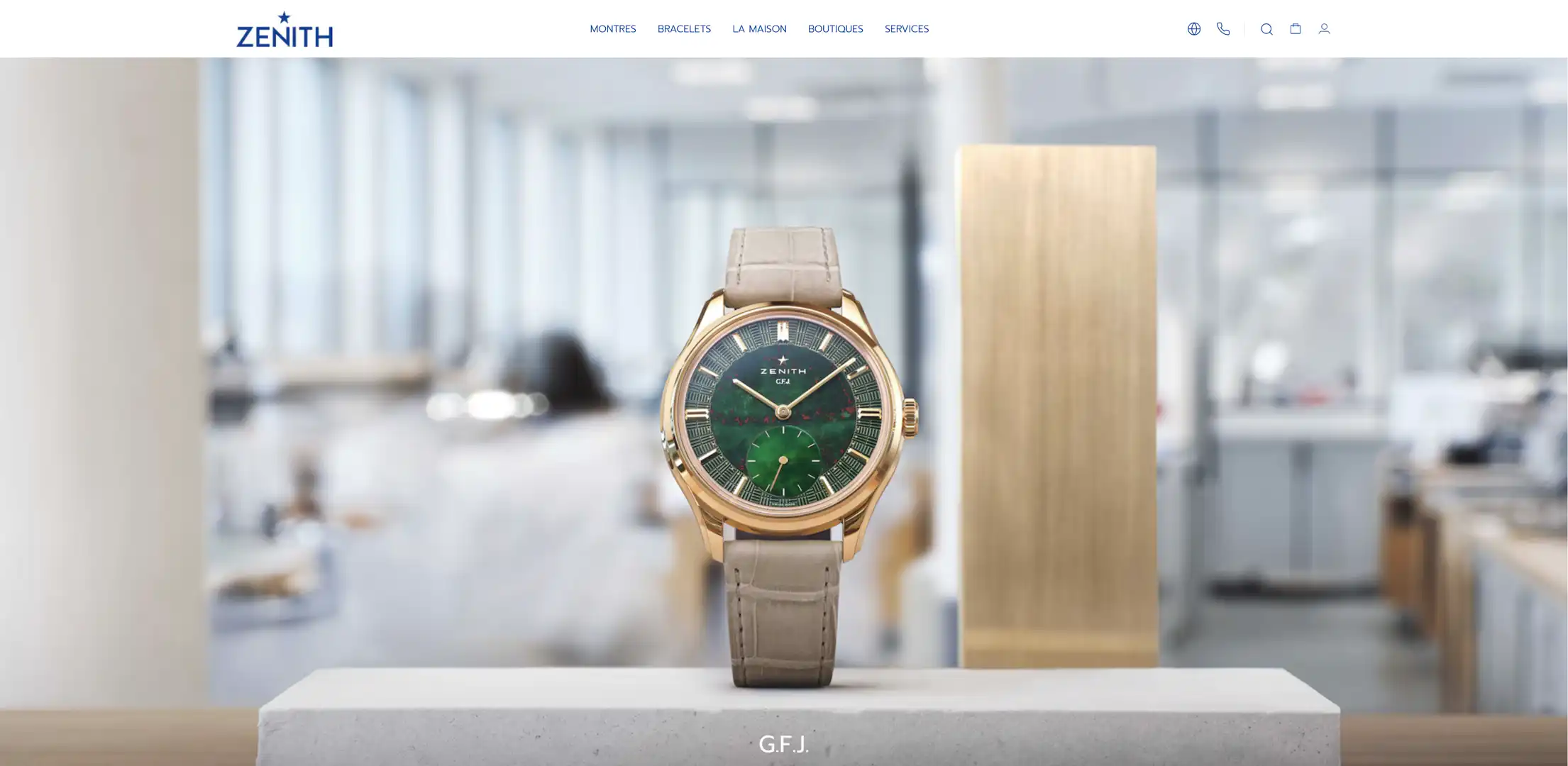
The model for this new direction already exists: the G.F.J., a three-hand watch in gold priced at €54,000, which won a prize at the GPHG. The idea, in other words, is to turn Zenith into a smaller, more exclusive house rather than a broad-range brand competing on volume.
LVMH denies any sale
Speculation about Zenith’s future inside the group has inevitably followed. LVMH, however, denies any plan to sell the brand at this stage. The restructuring is therefore presented as a repositioning within the group, not as a prelude to a disposal.
What it means for the industry
Zenith’s case illustrates a wider tension in Swiss watchmaking. Mid-range and upper-mid-range brands are squeezed between currency effects, trade barriers and weaker demand in Asia. Moving upmarket is one possible answer — but it is also a high-stakes bet for a brand whose identity has long rested on its chronographs and their accessibility.
The coming weeks, starting with the union deadline of 12 November, will show whether the proposals change the scope of the plan. Bold strategy or the end of an era: the El Primero house is at a turning point.
Sources
- Swiss and watch-industry press, citing an internal Zenith source (staff consultation)
- Morgan Stanley estimates
- LVMH statement
- Federation of the Swiss Watch Industry (FH), export statistics
This story first aired in our 60-second Short, 60 Secondes Chrono.